
How do you handle technical support if our customers have pressure washer gun leaks?
- VIP-User
- 2026-07-09
- 40
Handling pressure washer gun leaks requires identifying the root cause, typically involving worn seals, damaged threads, or a cracked valve. Providing direct replacement parts like a high-performance brass valve, supplying O-ring rebuild kits, and offering step-by-step technical guidance quickly resolves these pressure washer gun leakage issues to restore optimal operating pressure.
Core Solutions & Key Takeaways
- Identify the Leak Location: Most leaks occur at the inlet connection, the outlet swivel, or internally through the trigger housing due to valve wear.
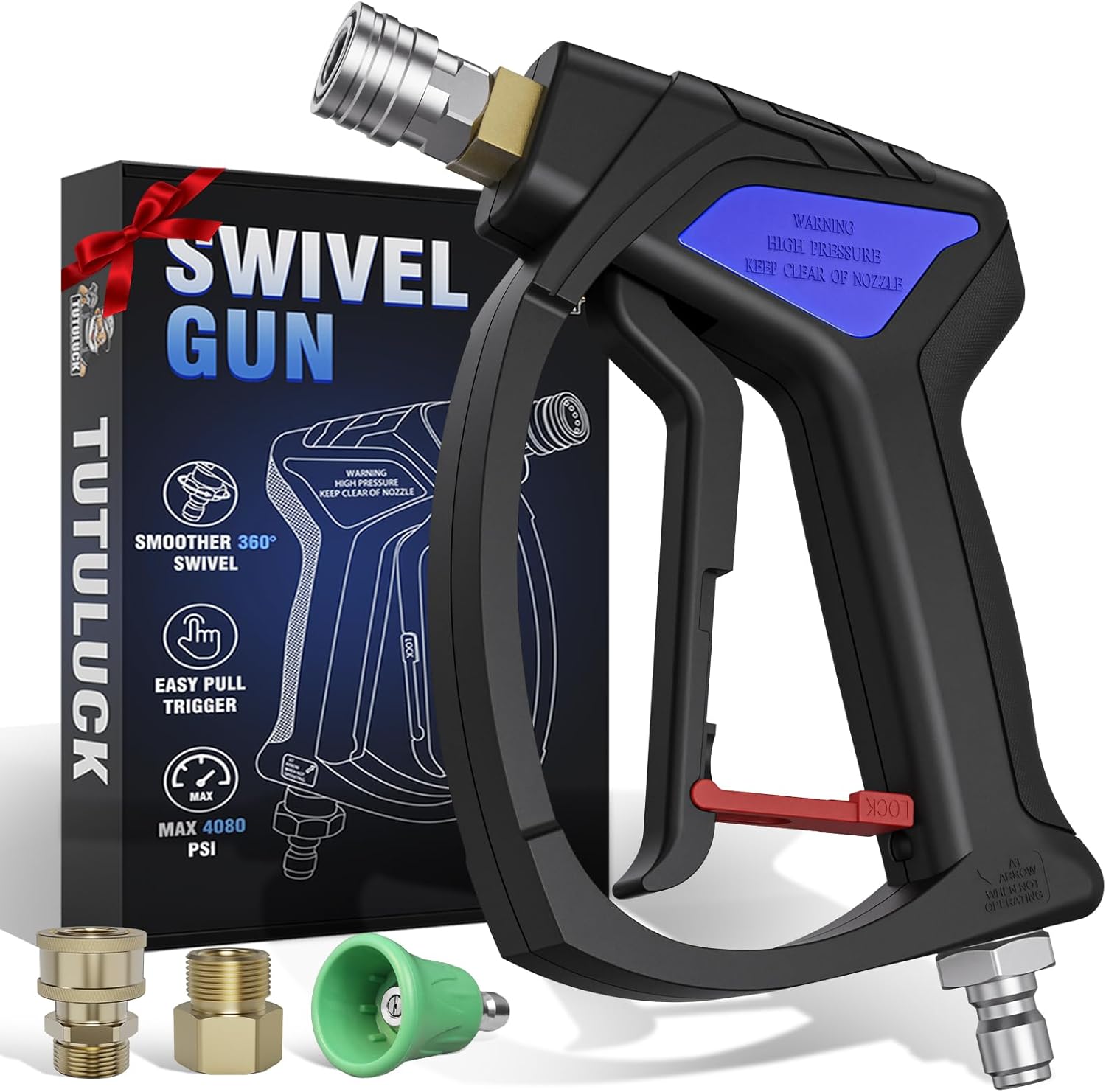
- Deploy Durable Components: Utilizing premium replacement parts, such as a pressure washer gun with brass valve rated for a maximum working pressure of 28Mpa (4060psi), prevents premature seal failure.
- Establish Standard Maintenance Procedures: Implement a regular inspection routine focusing on connection points like the inlet M22-14 or 3/8 quick connect and the outlet 3/8 swivel.
- Address Diverse Application Scenarios: Ensure your technical support team understands different usage demands, from vehicle chassis deep cleaning with an undercarriage cleaner to pre-washing cars, motorcycles, and RVs with a dedicated foam lance.
Detailed Architectural/Principle Analysis
High-pressure washer gun leaks are primarily caused by mechanical wear, thermal degradation, or pressure spikes exceeding the equipment's rated capacity. When a leak occurs internally, it is usually linked to the valve assembly. Standard plastic or low-grade metal valves degrade rapidly under continuous high-pressure cycles. Upgrading to a pressure washer gun with brass valve ensures superior resistance to mechanical fatigue and chemical exposure from cleaning agents. This specific configuration supports a flow rate of 45 Vmin-12 U.S.gal/min and tolerates operating temperatures ranging from 160°F to 320°F, making it resilient in demanding thermal environments.
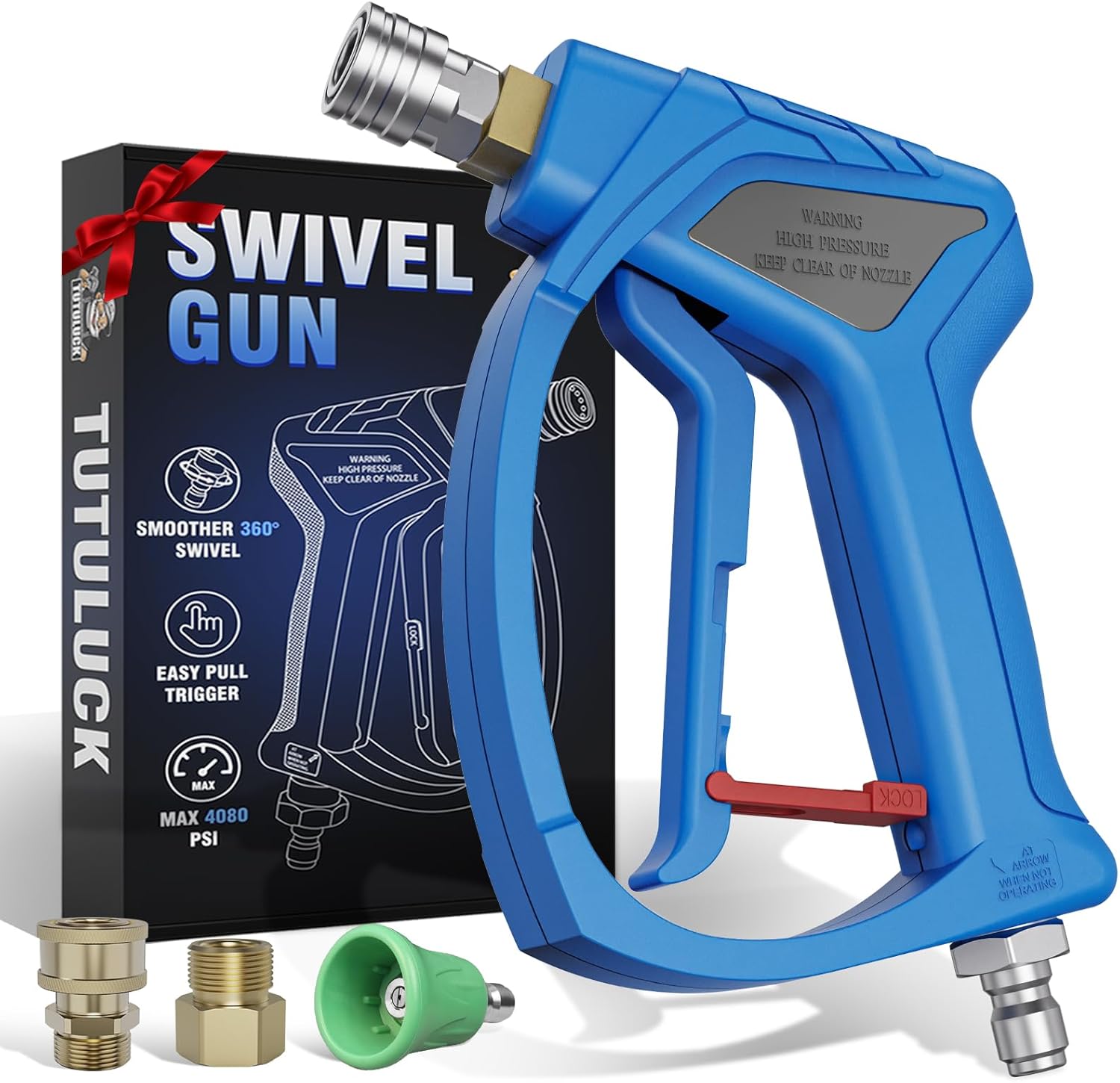
Connection-point leaks at the inlet M22-14/ 3/8 quick connect or the outlet 3/8 swivel are frequently caused by worn-out O-rings or thread stripping. In commercial applications, such as the America brug high pressure gun project managed for local America car washing accessories distributors, supplying robust quick-connect adapters and swivel fittings has proven to reduce connection-point failures significantly. The integration of stable joint designs allows operators to transition smoothly between different washing tools without compromising the seal integrity of the system.
Data/Solution Comparison
| Leak Location | Common Cause | Technical Specification / Solution | Prevention Method |
|---|---|---|---|
| Internal Valve Body | Cracked or degraded valve seat | Replace with brass valve rated up to 28Mpa (4060psi) | Avoid exceeding the maximum pressure and temperature limits (160°-320°F) |
| Inlet Connection | Worn O-ring or damaged threads | Verify M22-14 or 3/8 quick connect sealing surfaces | Use high-quality quick-connect fittings and replace O-rings regularly |
| Outlet Connection | Swivel joint friction wear | Install a robust 3/8 swivel connector | Ensure proper thread alignment and avoid overtightening during assembly |
Frequently Asked Questions (FAQ)
Q1: What are the primary causes of water dripping from the trigger area of a pressure washer gun?
A1: Dripping from the trigger area is almost always caused by a failing internal valve or worn-out internal seals. Utilizing a high-pressure gun equipped with a heavy-duty brass valve designed for up to 28Mpa prevents the internal components from warping or cracking under pressure, eliminating this type of leak.
Q2: How do temperature variations affect the sealing performance of pressure washer guns?
A2: Extreme temperatures can harden or melt standard rubber seals, leading to immediate leaks. Choosing components rated for high-temperature ranges, specifically between 160°F and 320°F, ensures that the seals and internal valve structural integrity remain stable during both cold-water and hot-water washing operations.
Q3: What technical support is available if we receive standard or customized parts that encounter issues?
A3: Technical support includes a full quality inspection before delivery to minimize defect rates. For any verified quality issues that arise under normal operating conditions, a 3-month quality responsibility period is provided to supply replacement parts or technical troubleshooting guidance.
Final Conclusion & Recommendations
To systematically resolve and prevent pressure washer gun leaks, distributors and service centers should transition to high-durability components featuring brass valves and standardized quick-connect interfaces. Implementing a proactive replacement program for consumable parts like O-rings and swivel joints will greatly extend the service life of your fleet or retail products. For long-term industrial supply cooperation, leveraging flexible manufacturing services allows for customized dimensions and materials tailored to specific operational demands. For detailed technical solutions or support, please reach out to us via sales8@zanchy.com.
About Us
Yiwu Zanchy Mechatronics Co. Ltd. is a professional integrated manufacturer and exporter focusing on the R&D, production, and sales of high-pressure cleaning machine full-series accessories. Established in 2019, the company operates a 3000sqm factory with more than 50 professional employees, including an independent R&D team and quality inspection personnel. We specialize in producing high-quality and durable cleaning equipment spare parts, supporting customized OEM and ODM services based on drawings, samples, and functional requirements. Zanchy has served clients across multiple industries, establishing long-term cooperative partnerships with distributors in more than 40 countries and regions.

Lastest
-
What PSI and GPM ratings should I look for when sourcing commercial-grade pressure washer guns for heavy-duty industrial cleaning?
2026-07-09 -
How do I choose the right pressure washer gun GPM and PSI specs for commercial car wash businesses?
2026-07-09 -
What specifications should I look for when buying a high pressue hose for industrial washing?
2026-07-09 -
How do I choose the right PSI rating for a high pressure hose used in industrial cleaning?
2026-07-09 -
What is the best way to choose the right PSI rating for a high pressue hose?
2026-07-09
SUBSCRIBE
INQUIRY