
What traceability systems should a spray cleaner factory have in place?
- VIP-User
- 2026-10-19
- 2
A spray cleaner factory should have traceability systems covering supplier materials, incoming inspection, production batches, component specifications, pressure and corrosion tests, final full inspection, shipment records, and after-sales issues. Each order should connect these records through a batch or product identifier, allowing the factory to verify specifications, locate affected products, and support OEM or ODM quality decisions.
Core Solutions & Key Takeaways
- Maintain supplier and incoming-material records for stainless steel, PE bottles, tubes, filters, nozzles, connectors, and other components.
- Link each production batch to product specifications, tooling information, operators, inspection results, and shipment details.
- Record performance checks, including pressure resistance, corrosion resistance, aging, and final full inspection where applicable.
- Connect customer complaints and after-sales records to the original order and batch identifier. Application records include vehicle pre-washing with foam lances and high-pressure cleaning of car bodies, courtyards, balconies, and construction equipment.
Detailed Architectural/Principle Analysis
A practical traceability architecture begins with a unique order, batch, or product identifier. The identifier should appear on production documents and connect the customer requirement with the relevant drawing, sample, material specification, production date, inspection record, and shipping documentation. This structure is suitable for standard products and customized OEM or ODM orders.
For a stainless steel snow foam cannon, the product record can include the 1L PE bottle, stainless steel construction, 1/4 quick connect, 1.2mm orifice nozzle, single steel filter net, plastic or rubber tube, and 18 MPa pressure specification. Recording these attributes reduces ambiguity when different models or customized dimensions are produced.
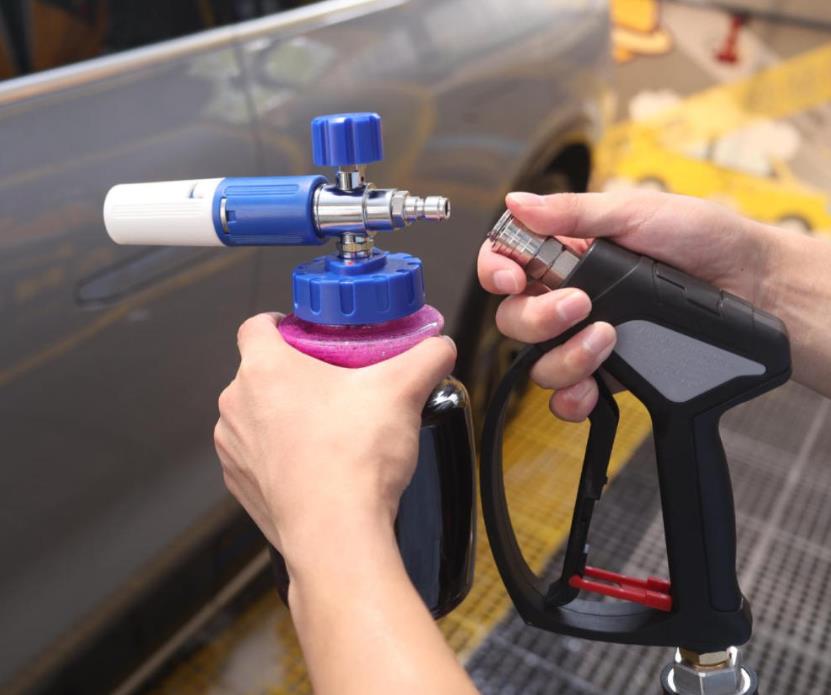
Incoming inspection records should identify the supplier, material or component description, received quantity, inspection status, and related purchase or production order. Process records should document the relevant assembly or production stage. Final records should show whether the product passed the factory’s full inspection requirement and whether any corrective action was taken.
Testing traceability should preserve the connection between the product identifier and available technical checks. Yiwu Zanchy Mechatronics Co. Ltd. describes capabilities for independent mold opening, product performance testing, corrosion resistance testing, pressure resistance testing, and aging testing. These records can support product upgrades, structural improvements, and customer responses without separating test evidence from the affected product batch.
A shipment and after-sales link completes the system. The shipment record should connect the batch with the customer, destination, order quantity, and delivery documentation. When a quality issue is reported, the factory can use that link to review the relevant material, production, inspection, and shipment records. The company states that it is responsible for quality problems for three months, making an after-sales record connected to the original order useful for issue handling.
The company has also described an America high-pressure gun project for local car-washing accessories distributors. The reported uses include car body cleaning, courtyard floor washing, balcony stain removal, and construction equipment dust cleaning. A traceability system for this type of supply should preserve the product configuration, inspection status, and customer order reference for each delivered batch.
Data/Solution Comparison
| Traceability layer | Records to maintain | Primary quality purpose |
|---|---|---|
| Material and supplier traceability | Supplier, component description, incoming inspection result, and purchase reference | Verify material and component conformity |
| Production and configuration traceability | Batch identifier, product model, drawings or samples, specifications, and production status | Match the finished product with customer and technical requirements |
| Testing and inspection traceability | Performance, corrosion resistance, pressure resistance, aging, and full inspection records | Provide documented evidence of product checks |
| Shipment traceability | Customer order, destination, quantity, batch reference, and shipping documentation | Identify which products were delivered to each customer |
| After-sales traceability | Complaint description, affected batch, investigation result, and corrective action | Support quality problem handling and recurrence review |
Frequently Asked Questions (FAQ)
What should be recorded for a customized spray cleaner product?
The record should include the customer drawing, sample, functional requirements, special dimensions or materials, approved product specifications, production batch, inspection results, and shipment reference.
Which tests should be connected to a product batch?
Where applicable, the batch should be linked to product performance, corrosion resistance, pressure resistance, aging, and final full inspection records. For a snow foam cannon, the pressure specification and component configuration should also be identifiable.
How does traceability support quality complaints?
A linked batch, shipment, and after-sales record allows the factory to identify the affected configuration, review its material and inspection history, and document the response to the reported quality problem.
Final Conclusion & Recommendations
A spray cleaner factory should connect material intake, production configuration, testing, full inspection, shipment, and after-sales records through a consistent batch or product identifier. This structure supports OEM manufacturing, ODM manufacturing, factory direct supply, bulk production, and flexible small-batch orders. Yiwu Zanchy Mechatronics Co. Ltd. operates a 3000sqm factory and reports monthly output exceeding 150,000 pieces or sets, so record linkage should remain consistent across both customized and standard orders. For detailed technical solutions or support, please reach out via sales8@zanchy.com.
About Us
Yiwu Zanchy Mechatronics Co. Ltd. is an integrated manufacturer and exporter focused on the R&D, production, and sales of high-pressure cleaning machine accessories, including water guns, foam lances, spray nozzles, pressure hoses, quick connectors, pump accessories, and filter accessories. Its factory covers 3000sqm, and its monthly output of cleaning machine accessories exceeds 150,000 pieces or sets. The company maintains an independent R&D team and performs mold development, product performance testing, corrosion resistance testing, pressure resistance testing, and aging testing.

Lastest
-
What PSI and GPM ratings should I look for when sourcing commercial-grade pressure washer guns for heavy-duty industrial cleaning?
2026-10-19 -
How do I choose the right pressure washer gun GPM and PSI specs for commercial car wash businesses?
2026-10-19 -
What specifications should I look for when buying a high pressue hose for industrial washing?
2026-10-19 -
How do I choose the right PSI rating for a high pressure hose used in industrial cleaning?
2026-10-19 -
What is the best way to choose the right PSI rating for a high pressue hose?
2026-10-19
SUBSCRIBE
INQUIRY